
The milestone crowns a record year for the domestic primary market where IPO mobilisation is set to cross Rs 1.7 trillion.

From Rs 73k to over Rs 1.2L between January-December 2025 -- is buying gold in 2026 still sensible?

The World Bank has announced that it will stop all its programmes in Russia and Belarus with "immediate effect" in response to Moscow's military operations in Ukraine and "hostilities" against the people of the war-torn country. On February 24, Russian forces launched military operations in Ukraine, three days after Moscow recognised Ukraine's breakaway regions - Donetsk and Luhansk - as independent entities. The decision comes as a large number of countries, organisations and businesses are severing ties and have imposed sanctions on Russia over the country's invasion of Ukraine, and with Belarus for its support and cooperation with Moscow.

This will be the last visit of Zoellick as President of World Bank as he is retiring on June 30.
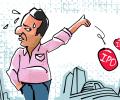
India's equity markets may have expanded rapidly, but initial public offerings (IPOs) are increasingly becoming exit vehicles for early investors rather than as engines for raising long-term capital, a shift that undermines the spirit of public markets, Chief Economic Advisor V Anantha Nageswaran warned on Monday at a CII event.

'In the long run, India's strong growth story and reforms to make assets globally attractive will determine the rupee's resilience.'
The government had projected the GDP growth to be at 8.5%.

South Africa will be eager to turn consistent recent form into a title-winning run when they open their women's ODI World Cup campaign against traditional powerhouses England in Guwahati on Friday.

'If I were a housewife, it would have been Ok. But I was set in my job and then suddenly I quit.'

The Reserve Bank of India (RBI) does not target any price level on the rupee, Governor Sanjay Malhotra reiterated at an International Monetary Fund and World Bank event on Wednesday.

The World Bank on Monday said hardening interest rates and a surge in oil prices worldwide will have only a marginal impact on India's economy and the country would continue to witness high GDP growth.
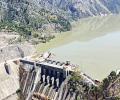
India has stopped releasing water from the Baglihar Dam on the Chenab River and is planning similar measures at the Kishanganga Dam on the Jhelum River, following a recent terror attack in Jammu and Kashmir. These hydroelectric dams offer India the ability to regulate water releases. This decision potentially affects the Indus Waters Treaty, a decades-old agreement between India and Pakistan governing the use of the Indus River and its tributaries. The Baglihar and Kishanganga dams have been points of contention between the two nations in the past.
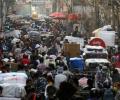
India will need to grow at an average 7.8 per cent to become a high-income country by 2047, a World Bank report said on Friday. To achieve this goal India would require reforms in financial sector as well as in land and labour market, the World Bank said in its India Country Memorandum titled 'Becoming a High-Income Economy in a generation'.

According to the report, the magnitude of internal migration is about two-and-a-half times that of international migration.
The World Bank on Friday indicated that it will double its lending to India to $2.5-3.0 billion annually within 2-3 years, and said it plans to raise $100 million from the domestic market through bonds.
India has brought down the number of people living below $1 a day by 2 percentage points to 24.3 per cent in three years up to 2005, as Asia's third-largest economy accelerated to 7 per cent plus growth in those years, latest data from the World Bank revealed. In absolute numbers, 9.6 million people came out of poverty between 2002 and 2005, the largest reduction between two consecutive surveys released by the World Bank since 1981.
The economic growth could slow down to 7.8 per cent in 2008 from over 9 per cent currently due to policy bottlenecks resulting in deceleration in investment growth in the country, says a World Bank report.

Amid US-China trade tensions and economic vulnerabilities, India must seize the 'China +1' opportunity, deepen reforms, secure FTAs, and globalise its firms for long-term growth, suggests Ajay Shah.
The World Bank has praised India for its rapid economic growth but was critical of the country's labour laws, caste system, gender inequality and imperfections in capital market that were widening inequality.
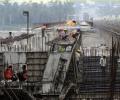
India retains the tag of the fastest growing country among the world's major emerging economies

'...the electoral playing field is tilted significantly in its favour.'
The World Bank on Tuesday said that India could achieve eight per cent economic growth, provided the government stepped up reforms, including measures to contain fiscal deficit and wasteful subsidies.
"GDP growth in India eased to a still strong 8.7 per cent in 2007, from 9.7 per cent in 2006, and is projected to slow further to 7 per cent in 2008," said the World Bank report on Global Development Finance released on Tuesday. World Bank attributed the moderation in GDP to 'monetary tightening in 2007 (that) led to softening in domestic demand'.
Buoyed by an increase in public investment and incentives to boost manufacturing, India's economy is expected to grow by 8.3 per cent in the fiscal year 2021-22, less than the previous projection early this year before the country was hit by the second wave of the COVID-19 pandemic, the World Bank has said in its latest report. World Bank chief economist for the South Asia Region Hans Timmer told PTI here that when one looks at the high frequency data, they see that as a result of the second wave of the COVID-19 pandemic, the recovery paused, and some indicate that the recovery actually declined briefly. "We project for this fiscal year 8.3 per cent (growth rate for Indian economy) that is less than we projected early in the year before the health crisis caused by the second wave. "Given the sharp contraction of the economy last year, it might not look like a lot, but in my view, that is actually very positive news, given the violent second wave and the severity of the health crisis," he said on Thursday.
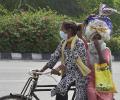
About 56 million Indians may have plunged into extreme poverty in 2020 as a result of the pandemic, increasing the global tally by 71 million and making it the worst year for poverty reduction since World War II, according to fresh estimates by the World Bank. "The global goal of ending extreme poverty by 2030 is likely to be missed: By then, about 600 million people will remain in abject poverty. A major course correction is needed," Indermit Gill, chief economist at the World Bank, tweeted. The World Bank in its latest "Poverty and Shared Prosperity" made fresh estimates of poverty using a new extreme poverty line based on the purchasing power parity (PPP) of $2.15, the earlier one being at $1.9.

India will argue for Pakistan's return to the Financial Action Task Force (FATF) grey list due to its alleged failure to combat money laundering and terror financing. The move comes after recent tensions between the two countries following a terror attack in Pahalgam, India. India believes Pakistan has not adequately addressed the issue of terrorism emanating from its territory and has diverted funds from multilateral agencies towards arms purchases.
Optimistic of India sustaining 8.0 per cent GDP growth, World Bank on Friday indicated that it will step up assistance to the country next fiscal from close to $2.0 billion this fiscal.
In May, 40 Rohingyas were blindfolded and flown to the Andaman and Nicobar islands and then thrown into the sea and made to swim to an island in Myanmar. And after the Pahalgam attack, at least 300 Muslims were 'pushed back' to Bangladesh from Assam.
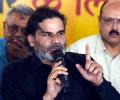
Former poll strategist Prashant Kishor's Jan Suraaj expressed disappointment over its poll debacle in the Bihar assembly elections, attributing the NDA's victory to cash transfers to women.

CPGRAMS -- an online platform available to citizens 24x7 to lodge their grievances to public authorities on service delivery -- has existed for close to two decades. But it has never been this active, points out Tamal Bandyopadhyay.
South Asia has the highest gender inequality in the world, says Kalpana Kochhar.
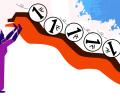
'Calibrated depreciation will help rebalance external fundamentals, offset some of the tariff differentials with competitors, improve the competitiveness of domestic substitutes vis-a-vis Chinese imports, and contribute to the easing of financial conditions at a time when the inflation rate is unusually low,' explains Sajjid Z Chinoy, head of Asia Economics at JP Morgan.
Finding "sense" in the Common Minimum Programme of the United Progressive Alliance government, the World Bank on Thursday said India could at least grow by 6 per cent over the long term, but containing fiscal deficit was important.
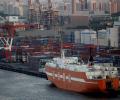
India's merchandise exports grew in the first three weeks of November compared with the same period last year, according to preliminary government data, Commerce and Industry Minister Piyush Goyal said on Tuesday. The uptick comes despite globa

Jamiat Ulama-i-Hind chief Maulana Arshad Madani's remarks alleging discrimination against Muslims, citing the Al Falah University case, have sparked a row with the BJP, who accused him of supporting terrorists.

A slowdown in India's growth rate, the bank said, has also affected the growth rate of South Asia. As a result, South Asia has fallen to second place after East Asia and the Pacific.
There is lack of scientific basis in computing the poverty line, says govt.
 © 2026 Rediff.com - Advertise with us - Disclaimer - Privacy Policy - Sitemap - Feedback - About us - Terms of use - Grievances